
 By Jason Roy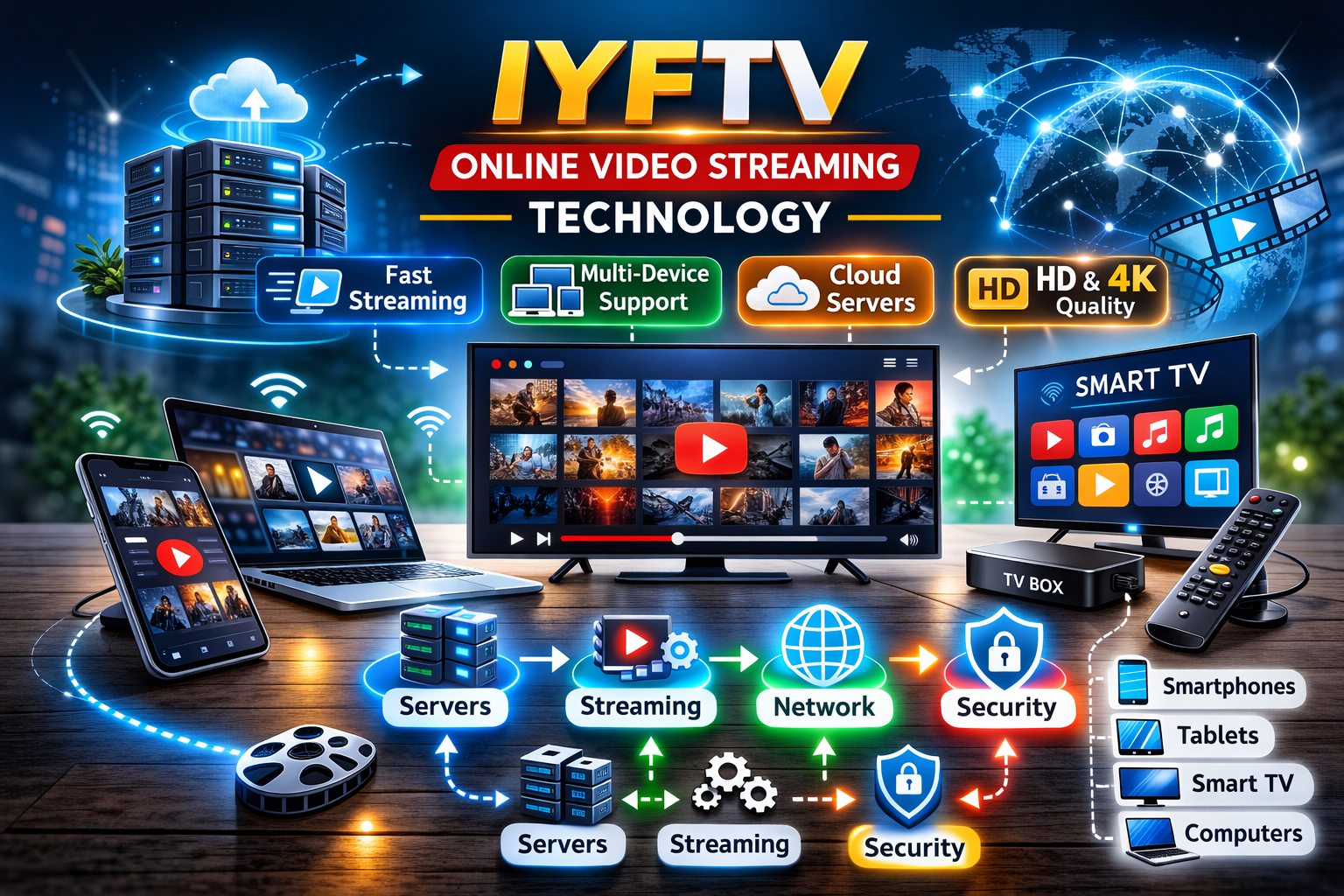
IYFTV is a term many users search when they look for online video platforms. From a technical view iyftv is linked with internet video delivery systems. This article explains iyftv using simple English and clear technical ideas. The focus is only on technology and system design SOA OS23.
What IYFTV Means in Technology
IYFTV refers to a type of online video system. It works on the internet and sends video to many devices. The system uses servers storage networks and apps.
Main ideas of this technology
-
Online video delivery
-
Multi device support
-
App based video playback
-
Internet streaming system
-
Cloud based services
Basic Structure of an IYFTV Platform
An iyftv system is made of many parts. Each part has a clear role in video delivery.
Main parts of the system
-
Video storage system
-
Streaming server system
-
User app system
-
Network delivery system
-
Data control system
Simple system flow
1 Video files are saved on servers
2 Video files are processed into many sizes
3 Video is sent to network servers
4 User device requests video
5 Video plays on screen
Server Technology in IYFTV
Servers are the core of this technology. They store videos and send them to users.
Server tasks
-
Save video data
-
Send video to users
-
Manage user requests
-
Handle large traffic
-
Keep system stable
Types of servers used
-
Main storage servers
-
Streaming servers
-
Cache servers
-
Backup servers
Server roles table
| Server Type | Main Role |
|---|---|
| Storage Server | Save video files |
| Streaming Server | Send video data |
| Cache Server | Speed up delivery |
| Backup Server | Keep extra copies |
Video Streaming Technology
Video streaming allows users to watch videos without full download. The video is sent in small parts. The player shows each part as it arrives.
Key streaming features
-
Fast video start
-
Smooth playback
-
Auto quality change
-
Low buffering
Streaming process
-
Video is cut into small parts
-
Each part is sent to the device
-
The player loads parts in order
-
Video plays in real time
Benefits of streaming
-
Less waiting time
-
Lower data use
-
Works on slow networks
-
Supports many devices
Video Format and Quality Levels
This systems use many video formats. This helps different devices play video well.
Common video quality levels
-
Low quality for slow internet
-
Medium quality for mobile devices
-
High quality for large screens
-
Ultra high quality for modern TVs
Video quality table
| Quality Level | Use Case |
|---|---|
| Low | Weak network |
| Medium | Mobile devices |
| High | Desktop screens |
| Ultra | Smart TV devices |
Why quality levels matter
-
Helps reduce buffering
-
Saves data usage
-
Improves user experience
-
Matches device power
App Technology in IYFTV
Apps are the user side of iyftv. They connect users to servers. They show video lists and play content.
Main app functions
-
User login
-
Video search
-
Video playback
-
History saving
-
Network check
Types of apps
-
Mobile phone apps
-
Tablet apps
-
Smart TV apps
-
Desktop apps
App features list
-
Touch control on phones
-
Remote control support on TV
-
Keyboard support on desktop
-
Auto screen size change
Device Support and Hardware Use
IYFTV systems support many device types. Each device has different hardware power.
Supported devices
-
Smartphones
-
Tablets
-
Smart TVs
-
TV boxes
-
Computers
Device support table
| Device | Hardware Feature |
|---|---|
| Phone | Touch screen |
| Tablet | Larger display |
| Smart TV | Remote control |
| TV Box | Media chip |
| Computer | Keyboard input |
Hardware use in playback
-
GPU helps video decoding
-
CPU manages app logic
-
Memory stores video parts
-
Network chip receives data
Network Technology and Speed Control
Network speed affects video quality. IYFTV systems adjust video based on network speed.
Network control methods
-
Auto speed check
-
Auto quality change
-
Data buffer control
-
Network error handling
Network optimization steps
1 Detect network speed
2 Choose video quality
3 Adjust video flow
4 Reduce buffering
5 Recover on network drop
Network data table
| Network State | Video Action |
|---|---|
| Fast | High quality video |
| Medium | Medium quality video |
| Slow | Low quality video |
| Unstable | Pause and buffer |
Data Security in IYFTV Systems
Security protects users and systems. IYFTV uses basic data protection methods.
Security features
-
Secure data transfer
-
Encrypted user sessions
-
Server access control
-
App data protection
Security goals
-
Protect user data
-
Prevent data theft
-
Stop fake access
-
Keep system stable
And Security methods list
-
Secure network links
-
Token based access
-
Limited user permissions
-
Safe storage methods
System Monitoring and Stability
Monitoring keeps the system running well. It checks server health and user experience.
Monitoring tasks
-
Track server load
-
Detect errors
-
Check video quality
-
Measure network delays
Monitoring data table
| Metric | Purpose |
|---|---|
| Server load | Check system pressure |
| Error rate | Find system issues |
| Playback time | Measure user experience |
| Network delay | Detect slow links |
Stability methods
-
Auto server scaling
-
Load balance control
-
Backup system use
-
Error recovery process
Search and Content Index Technology
Users need to find videos easily. IYFTV systems use search engines.
Search system features
-
Keyword search
-
Category filter
-
Recent content list
-
Popular content list
Search flow
1 User enters search text
2 System checks video data
3 Results are ranked
4 Results are shown to user
Content index data table
| Index Type | Purpose |
|---|---|
| Title index | Search by name |
| Tag index | Search by topic |
| Category index | Group content |
| History index | Show recent items |
System Updates and Software Control
IYFTV systems change over time. Updates fix bugs and improve performance.
Update features
-
App version update
-
Server software update
-
Security patch update
-
Feature update
Update process
1 Test new software
2 Deploy to servers
3 Release to users
4 Monitor system health
Update goals
-
Improve speed
-
Fix errors
-
Add new functions
-
Improve device support
Future Technology Trends for IYFTV
Streaming systems continue to grow. Future iyftv systems may include new tech.
The Future tech ideas
-
Faster video codecs
-
Smarter network routing
-
Better device support
-
Lower data usage
-
Stronger security systems
Future system goals
-
Less buffering
-
Faster start time
-
Better image quality
-
Stable playback
-
Wide device support
Frequently Asked Questions
What is iyftv in technology?
iyftv is an online video streaming system that sends video from servers to user devices through the internet
How does iyftv streaming work?
iyftv streaming works by sending small video parts from servers to devices so users can watch video without full download
Which devices support iyftv?
iyftv supports phones tablets smart tv devices tv boxes and computers
What type of servers does iyftv use?
iyftv uses storage servers streaming servers cache servers and backup servers to deliver video smoothly
How does iyftv handle slow internet?
iyftv adjusts video quality based on network speed to reduce buffering and keep playback stable
Is iyftv safe to use from a tech view?
iyftv uses secure data transfer encrypted sessions and access control to protect system and user data
Conclusion
IYFTV represents a modern internet video system. It uses servers networks apps and devices to deliver video. The system relies on streaming technology to send video in real time. It supports many devices and adjusts to network speed. Security monitoring and updates keep the system stable. From a technical view iyftv is built on cloud systems video streaming methods and multi device app design. The future of iyftv technology will focus on better performance better security and better user experience.