
 By Jason Roy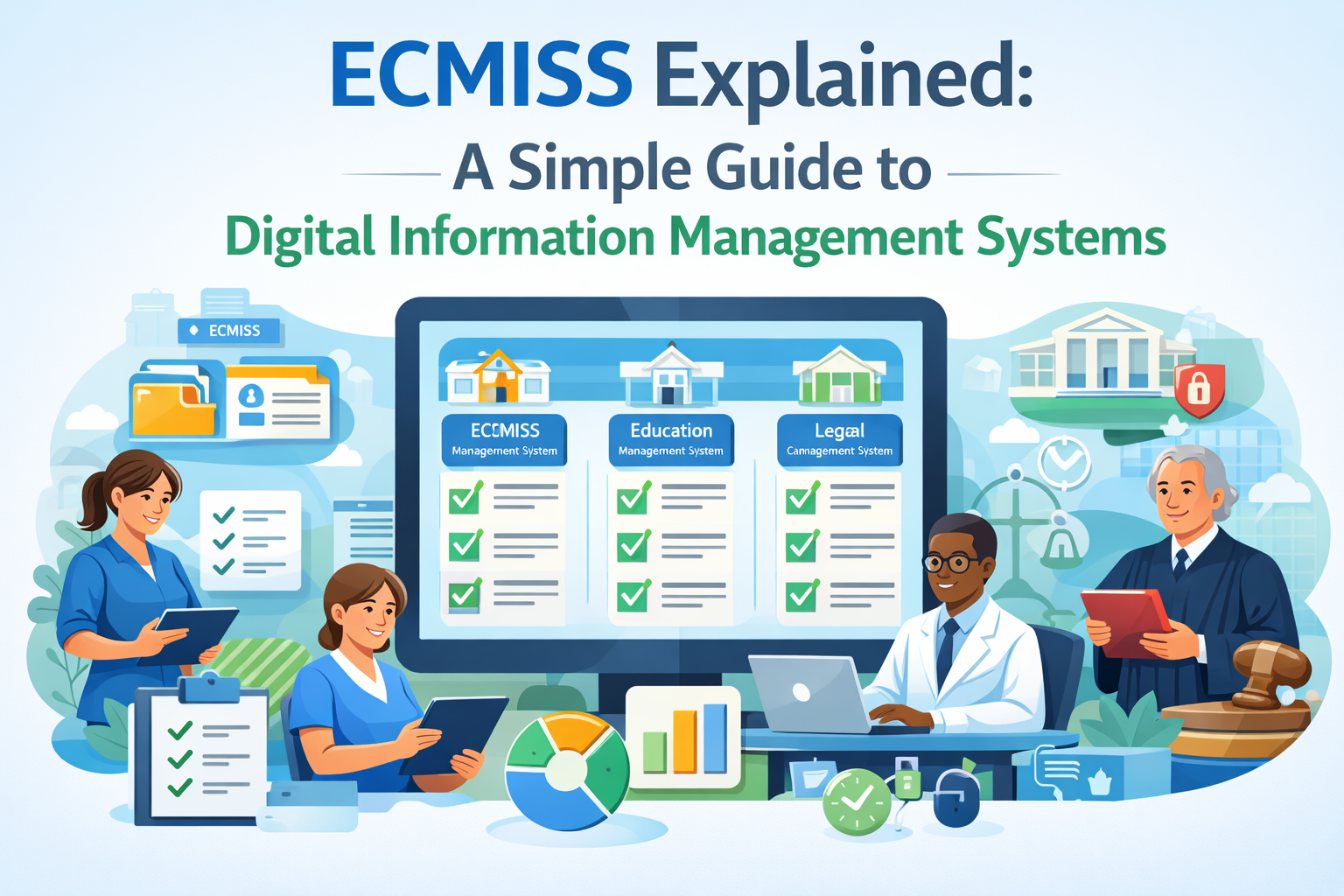
ECMISS is a term that is used in different industries to describe digital systems that help manage information, documents, and workflows. The same word can mean different things depending on the context. In business, ECMISS often refers to an enterprise content or information management system, education, it can refer to a management information system for schools and colleges, courts and legal systems, ECMISS (or similar terms like ECMIS or ECCMIS) is used for electronic case and court management systems NZBGeek
What Is ECMISS?
ECMISS is a general term used for systems that manage content, data, and workflows in a digital way. The exact meaning depends on the sector using it. While there is no single global product called “ECMISS” used everywhere, the term is commonly used in articles and guides to describe three main types of systems.
Common meanings of ECMISS
ECMISS is often used to describe one of the following:
Enterprise Content Management Information System
Used by businesses to manage documents, records, and workflows.
Education Management Information System
Used by schools and colleges to manage student data, academic records, and administration.
Electronic Court or Case Management Information System
Used by courts and legal bodies to manage cases, filings, and court processes digitally.
Core purpose of ECMISS
No matter the industry, ECMISS systems aim to:
-
Store data and documents in one place
-
Make information easy to find
-
Reduce paperwork and manual tasks
-
Improve workflow speed and accuracy
-
Support transparency and compliance
Who Uses ECMISS?
Different groups use ECMISS depending on the sector. Each group has specific needs, but all benefit from better organization and automation.
Business and enterprise users
Businesses use ECMISS-style systems to manage internal information and processes.
Common users include:
-
Office staff
-
Operations teams
-
Human resources teams
-
Managers and executives
-
Compliance and audit teams
Education sector users
Schools and colleges use education-focused ECMISS systems to manage daily academic and administrative work.
Common users include:
-
School administrators
-
Teachers and lecturers
-
IT staff
-
Students (limited access)
-
Parents (in some systems)
Legal and court system users
Courts and legal offices use ECMISS systems to manage cases and legal documents.
Common users include:
-
Court clerks
-
Judges and magistrates
-
Lawyers and legal assistants
-
Registry and records staff
-
Government administrators
Core Features of ECMISS
Although features vary by sector, most ECMISS systems share a common set of functions. These features support data management, workflows, reporting, and security.
Data and document management
ECMISS systems provide tools to store and manage information in digital form.
Key functions include:
-
Centralized document storage
-
File upload and download
-
Search and filtering tools
-
Version control for documents
-
Tagging and categorization
Workflow and process automation
Automation is a major benefit of ECMISS. It reduces manual work and speeds up processes.
Common automation features:
-
Task assignment
-
Approval workflows
-
Automated notifications
-
Status tracking
-
Reminders and alerts
Reporting and analytics
ECMISS systems help organizations track performance and activity.
Typical reporting features:
-
Activity logs
-
Task completion reports
-
Case or record status reports
-
Compliance and audit reports
-
Basic analytics dashboards
Security and access control
Security is important when handling sensitive data.
Common security features:
-
Role-based access control
-
User authentication
-
Audit trails
-
Data backups
-
Permission settings
ECMISS Feature Comparison Table
| Feature Area | Business ECMISS | Education ECMISS | Court/Legal ECMISS |
|---|---|---|---|
| Main Data Type | Documents and records | Student and academic data | Case files and legal docs |
| Workflow Automation | Approvals, reviews | Enrollment, grading flows | Case processing |
| Reporting | Performance, compliance | Academic and admin reports | Case status, court stats |
| User Roles | Staff, managers | Admins, teachers, students | Clerks, judges, lawyers |
| Security Needs | High | High | Very high |
Benefits of Using ECMISS
ECMISS brings many practical benefits to organizations. These benefits affect daily work, management decisions, and overall service quality.
Operational benefits
-
Faster access to information
-
Reduced paperwork
-
Less duplication of work
-
Better tracking of tasks and records
-
Improved workflow efficiency
Management benefits
-
Better visibility into processes
-
Clear accountability
-
Data-driven decision-making
-
Easier reporting
-
Improved planning and resource use
User benefits
-
Simple and organized interfaces
-
Less manual data entry
-
Faster task completion
-
Better communication between teams
-
Reduced errors
Use Cases of ECMISS
ECMISS systems are used in many real-world situations. The exact use case depends on the sector.
businesses
-
Managing contracts and company documents
-
Tracking approvals and reviews
-
Handling employee records
-
Supporting audits and compliance
-
Organizing project documents
education
-
Managing student enrollment records
-
Tracking grades and attendance
-
Managing teacher schedules
-
Handling communication with parents
-
Supporting reporting to authorities
Use cases in courts and legal systems
-
Digital case filing
-
Case status tracking
-
Managing court schedules
-
Document storage and retrieval
-
Supporting paperless court processes
ECMISS vs Traditional Systems
Many organizations still use paper-based or basic digital tools like spreadsheets and emails. ECMISS provides a more structured and efficient approach.
Key differences between traditional systems and ECMISS
| Area | Traditional Systems | ECMISS Systems |
|---|---|---|
| Data Storage | Paper files or scattered | Centralized digital storage |
| Search | Manual search | Fast digital search |
| Workflow | Manual handovers | Automated workflows |
| Reporting | Manual report creation | Automated reports |
| Security | Limited | Role-based and audited |
| Scalability | Hard to scale | Easy to scale |
Implementation of ECMISS
Implementing ECMISS requires careful planning. A clear implementation process helps organizations avoid common problems.
Steps to implement ECMISS
Define goals
Decide what problems the system should solve.
Map current processes
Understand how work is done today.
Design workflows
Create simple digital workflows.
Configure the system
Set up users, roles, and permissions.
Migrate data
Move important records to the new system.
Train users
Provide basic training and guides.
Launch and monitor
Go live and monitor early usage.
Implementation planning checklist
-
Clear leadership support
-
Budget and resources
-
Device and internet readiness
-
Data privacy planning
-
User training schedule
Training and Change Management
People are key to the success of ECMISS. Training and change management help users adopt the system smoothly.
Training best practices
-
Short and simple training sessions
-
Step-by-step user guides
-
Hands-on practice
-
Clear support channels
-
Regular refresher sessions
Change management tips
-
Explain the benefits clearly
-
Involve users early
-
Address concerns openly
-
Start with pilot groups
-
Celebrate early successes
Challenges and Limitations of ECMISS
While ECMISS offers many benefits, there are also challenges to consider.
Common challenges
-
Learning curve for new users
-
Resistance to change from paper-based work
-
Technical issues during early stages
-
Data migration difficulties
-
Dependence on internet and devices
How to reduce these challenges
-
Provide ongoing support
-
Keep interfaces simple
-
Roll out in phases
-
Offer help desks or champions
-
Gather and act on user feedback
Best Practices for Using ECMISS
Following best practices helps organizations get long-term value from ECMISS systems.
Daily use best practices
-
Keep records updated in real time
-
Use clear and simple naming for files
-
Follow standard workflows
-
Report issues early
-
Maintain data quality
Management best practices
-
Review reports regularly
-
Monitor system usage
-
Update workflows as needs change
-
Provide ongoing training
-
Ensure security policies are followed
Measuring Success with ECMISS
Organizations should track key metrics to understand the impact of ECMISS.
Key performance indicators
-
Time saved on manual work
-
Reduction in paperwork
-
Task or case completion rates
-
Error reduction
-
User satisfaction levels
Example success tracking table
| Metric | Before EC-MISS | After EC-MISS |
|---|---|---|
| Paperwork Time | High | Low |
| Data Retrieval Time | Slow | Fast |
| Error Rate | Higher | Lower |
| Reporting Time | Long | Short |
| Process Transparency | Low | High |
Security, Privacy, and Compliance
EC-MISS systems often handle sensitive information. Security and privacy must be treated seriously.
Key security practices
-
Strong user authentication
-
Role-based access control
-
Regular backups
-
Audit logs
-
Secure data storage
Privacy considerations
-
Limit access to sensitive data
-
Follow local data protection laws
-
Train users on data handling
-
Monitor system access regularly
Future Trends of EC-MISS
As digital transformation grows, EC-MISS systems are likely to evolve.
Expected future trends
-
More automation of routine tasks
-
Better analytics and insights
-
Deeper integration with other systems
-
More mobile-friendly interfaces
-
Smarter alerts and notifications
These trends will help organizations work faster and make better decisions.
Practical Example of EC-MISS in Action
A medium-sized organization moves from paper-based records to an EC-MISS-style system. Before the change, staff spent hours searching for documents and preparing reports. After implementation, documents are stored digitally and can be found in seconds. Workflows are automated, reducing delays. Managers use dashboards to monitor progress. Over time, the organization sees fewer errors, faster service delivery, and better compliance reporting
FAQs
Is EC-MISS a single software product?
No. EC-MISS is a general term used to describe different types of information management systems in business, education, and courts.
Can small organizations use EC-MISS?
Yes. Many EC-MISS-style systems can be scaled for small and medium organizations.
Does EC-MISS replace paper completely?
In many cases, yes. Some organizations may still keep limited paper backups based on policy.
Is training required?
Yes. Basic training helps users adopt the system faster and avoid errors.
Conclusion
EC-MISS represents a group of digital systems designed to manage information, documents, and workflows across different sectors such as business, education, and legal systems. While the exact meaning of EC-MISS can change by context, the main goals remain the same: centralize data, reduce manual work, improve efficiency, and support transparency and compliance. By understanding the features, benefits, and challenges of EC-MISS, organization-s can make better decisions when moving from traditional systems to digital platforms. With proper planning, training, and best practices, EC-MISS-style systems can support long-term growth, better service delivery, and more organized operations.