
 By Jason Roy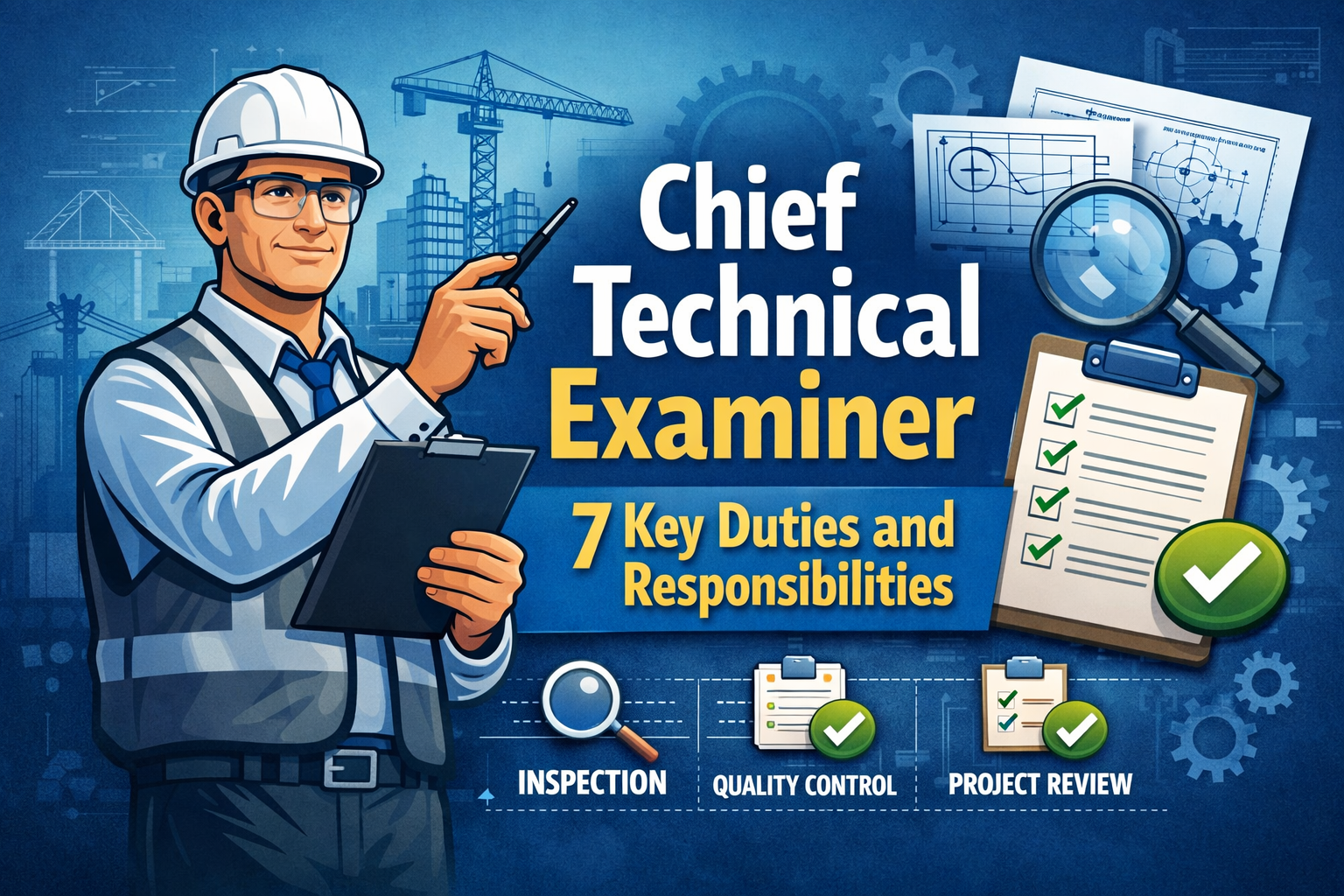
A Chief Technical Examiner is a senior technical professional who checks and reviews technical work in an organization. The main goal of this role is to make sure that projects and systems follow approved designs standards and rules. This position is common in engineering construction infrastructure and other technical industries. The Chief Technical Examiner works as an independent reviewer. The person studies technical documents visits project sites and checks the quality of work. After the review the examiner prepares a report that explains the findings and gives recommendations for improvement.
Because of this role organizations can improve project quality increase transparency and reduce risks. The Chief Technical Examiner supports good technical practice and helps ensure that projects are completed correctly Grospal.
Purpose of the Chief Technical Examiner
The main purpose of a Chief Technical Examiner is to check technical work and confirm that it follows approved standards and rules. The role helps organizations maintain quality and accuracy in projects. The examiner reviews different parts of technical work. This may include designs materials construction methods measurements and costs. By studying these areas the examiner can detect mistakes or weak practices.
Key goals of the role
-
Ensure projects follow technical standards
-
Improve quality of engineering work
-
Detect technical problems early
-
Reduce financial and safety risks
-
Provide independent technical review
This role is important for both public and private organizations that manage technical projects.
Scope of work
The Chief Technical Examiner reviews many types of technical projects and systems. The scope of work depends on the organization and industry.
Types of work reviewed
-
Engineering projects
-
Construction and infrastructure work
-
Industrial operations
-
Technical installations
-
Procurement of technical equipment
The examiner may review work at different stages of a project.
Project stages examined
| Project stage | Work of the examiner |
|---|---|
| Planning stage | Review designs and technical proposals |
| Procurement stage | Check technical requirements and estimates |
| Execution stage | Inspect work at project sites |
| Completion stage | Verify quality of final work |
By reviewing each stage the examiner ensures that the project follows approved technical requirements.
Documents reviewed during examination
A Chief Technical Examiner studies many technical documents. These documents provide information about project design cost and execution.
Important documents
-
Engineering drawings
-
Technical specifications
-
Bills of quantities
-
Cost estimates
-
Inspection reports
-
Material test reports
-
Contracts and agreements
-
Measurement records
Careful study of these documents helps the examiner understand whether the project follows correct procedures.
Main responsibilities of a Chief Technical Examiner
The Chief Technical Examiner performs several duties to maintain quality and compliance in technical work.
Technical inspections
Technical inspection is one of the main duties of the examiner. The examiner visits project sites or facilities and checks the actual work.
During inspection the examiner reviews
-
Workmanship quality
-
Material quality
-
Construction methods
-
Compliance with design
The goal is to confirm that the physical work matches the approved technical plans.
Quality assurance
Quality assurance means making sure that the project work meets required standards.
The Chief Technical Examiner checks
-
Whether materials meet required quality
-
Whether work follows approved procedures
-
Whether safety standards are applied
Strong quality checks help prevent defects and failures.
Measurement verification
Measurements are used to calculate quantities of work and project payments. The examiner checks these measurements to confirm they are correct.
Measurement verification helps ensure
-
Accurate project records
-
Fair payments to contractors
-
Correct use of materials
Cost and estimate review
The Chief Technical Examiner also reviews project cost estimates. The examiner checks whether the costs are reasonable and supported by proper calculations.
Cost review includes checking
-
Rate analysis
-
Quantity calculations
-
Estimated project expenses
This review helps control unnecessary spending.
Compliance verification
Technical projects must follow many rules and standards. The Chief Technical Examiner ensures that these requirements are followed.
Compliance checks include
-
Engineering standards
-
Safety rules
-
Organizational procedures
-
Industry guidelines
If the examiner finds a violation it is recorded and reported.
Reporting and documentation
After completing the examination the Chief Technical Examiner prepares a technical report. The report explains the observations and gives recommendations.
Structure of a technical examination report
| Section | Purpose |
|---|---|
| Project information | Basic details of the project |
| Scope of review | Areas examined during inspection |
| Observations | Technical findings |
| Issues identified | Problems or deviations |
| Recommendations | Actions to improve the project |
| Summary | Overall conclusion |
These reports help management understand project performance and take corrective action.
Corrective actions
When problems are found the examiner suggests solutions. These solutions help fix current issues and prevent similar problems in the future.
Examples of corrective actions
-
Improve construction procedures
-
Replace defective materials
-
Update documentation practices
-
Adjust project cost estimates
Corrective actions improve project quality and reduce risks.
Methods used by Chief Technical Examiners
The examiner uses different methods to perform technical reviews.
Common examination methods
-
Site inspection
-
Technical audit
-
Document review
-
Sample testing
-
Quality checks
These methods allow the examiner to study the project carefully and identify technical issues.
Tools used in technical examination
The examiner also uses several tools to perform inspections and collect information.
| Tool | Use |
|---|---|
| Inspection checklist | Guide for reviewing technical work |
| Measuring instruments | Check dimensions and quantities |
| Testing equipment | Test material strength and quality |
| Cameras | Record site conditions |
| Reporting software | Prepare technical reports |
Using proper tools improves the accuracy of examinations.
Governance and authority
The Chief Technical Examiner works within a structured system that supports independence and fairness.
Key governance principles
-
Independence from project execution teams
-
Objective evaluation based on evidence
-
Clear reporting structure
-
Transparent examination procedures
These principles ensure that technical reviews remain reliable and trustworthy.
Skills required for a Chief Technical Examiner
The role requires both technical knowledge and professional skills.
Important skills
-
Strong engineering knowledge
-
Understanding of technical standards
-
Analytical thinking
-
Attention to detail
-
Clear communication skills
-
Ethical behavior and integrity
These skills help the examiner perform accurate evaluations and prepare clear reports.
Deliverables produced by the examiner
The work of this produces several important documents.
Main deliverables
| Deliverable | Description |
|---|---|
| Technical examination report | Detailed review of project |
| Non compliance report | List of violations or defects |
| Inspection notes | Observations during site visits |
| Corrective action report | Suggested improvements |
| Follow up report | Review after corrections |
These deliverables help organizations improve project management and technical performance.
Common issues found during examinations
Technical examinations often reveal recurring problems in projects.
Typical findings
-
Work not matching design specifications
-
Poor quality materials
-
Incorrect measurements
-
Incomplete documentation
-
Weak quality control systems
-
Poor workmanship
By identifying these problems early the examiner helps prevent larger issues later.
Benefits of the Chief Technical Examiner role
The presence of this brings many advantages to an organization.
Major benefits
-
Better quality technical work
-
Reduced project risks
-
Improved financial control
-
Increased safety in projects
-
Greater transparency and accountability
These benefits help organizations manage projects more effectively.
Career path for Chief Technical Examiner
Most people in this role have strong technical backgrounds and many years of experience.
Education
Common educational qualifications include
-
Degree in engineering
-
Training in quality management
-
Professional technical certifications
Professional experience
Many Chief Technical Examiners previously work as
-
Project engineers
-
Construction managers
-
Quality control engineers
-
Technical auditors
Experience in technical fields helps them understand complex project issues.
Best practices for effective examination
Organizations can improve technical oversight by following several best practices.
Recommended practices
-
Maintain independence of examiners
-
Use standard inspection procedures
-
Keep clear documentation
-
Conduct regular technical reviews
-
Provide training for examiners
These practices improve the quality and reliability of examinations.
Frequently Asked Questions
What is a Chief Technical Examiner?
It is a senior technical professional who reviews engineering or technical work. The role ensures that projects follow approved designs standards and quality requirements.
What does a Chief Technical Examiner do?
A Chief Technical Examiner inspects projects reviews technical documents verifies measurements and checks compliance with technical standards. The examiner also prepares reports and suggests improvements.
What skills are required for this?
Important skills include engineering knowledge problem solving attention to detail technical reporting and understanding of industry standards.
Why is a Chief Technical Examiner important?
It helps improve project quality reduce technical risks control costs and ensure that work follows approved standards.
What documents does a Chief Technical Examiner review?
The examiner reviews engineering drawings specifications cost estimates inspection reports measurement records and project contracts.
Conclusion
The Chief Technical Examiner plays a key role in maintaining technical quality and integrity in organizations. By reviewing designs inspecting project work and verifying compliance the examiner ensures that projects meet required standards. Through systematic examination and clear reporting the Chief Technical Examiner helps organizations detect problems early reduce risks and improve project performance. This role contributes to better project outcomes improved accountability and stronger trust in technical operations.