
 By ibrahim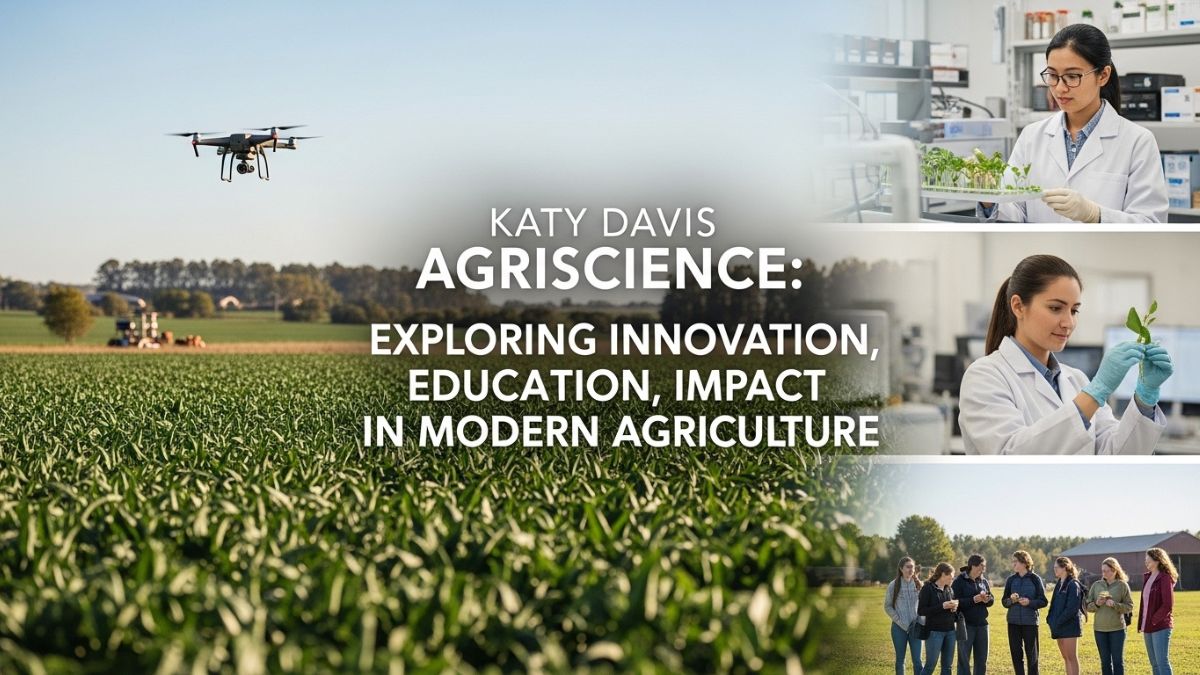
Katy Davis Agriscience is a term that has gained increasing attention within discussions related to agricultural education, sustainable farming, and modern agriscience practices. As agriculture continues to evolve through technology, research, and environmental awareness, concepts associated with represent a blend of academic learning and practical application. This growing recognition reflects a wider global shift toward smarter, more sustainable food systems.
In today’s world, agriscience is no longer limited to traditional farming methods. It encompasses data analysis, soil science, biotechnology, and environmental stewardship. it fits into this modern framework by highlighting the importance of education-driven agricultural development and innovation.
The Foundation of Katy Davis Agriscience
it is rooted in the idea that strong <strong>agricultural systems begin with education, research, and responsible land management. The term is often associated with agriscience-focused learning environments that encourage students and professionals to understand both the science and economics behind food production.
Agriscience programs connected to emphasize real-world problem solving. They bridge the gap between classroom knowledge and hands-on agricultural experience, preparing individuals to address modern challenges such as climate change, food security, and sustainable resource use.
Core Elements of Katy Davis Agriscience
| Focus Area | Description |
|---|---|
| Agricultural Education | Combines theory with practical learning |
| Sustainability | Promotes environmentally responsible practices |
| Innovation | Encourages modern tools and techniques |
| Community Impact | Supports local and regional agriculture |
Educational Importance of Katy Davis Agriscience
Education plays a central role in . it education equips learners with a strong foundation in biology, chemistry, environmental science, and agricultural technology. This multidisciplinary approach helps students understand how science directly influences food systems and rural economies.
Programs aligned with often focus on experiential learning. Students may engage in laboratory work, field studies, and agricultural projects that simulate real-world farming conditions. This hands-on exposure builds confidence and practical skills that are essential in modern agribusiness and research roles.
Katy Davis Agriscience and Sustainable Farming Practices
s=”yoast-text-mark” data-start=”3442″>-end=”3782″>Sustainability is a key pillar of . Modern agriculture must balance productivity with environmental responsibility, and agriscience provides the tools to achieve this balance. Through research-based practices promotes efficient use of water, soil conservation, and reduced environmental impact.
Sustainable farming methods supported by agriscience include crop rotation, precision agriculture, and integrated pest management. These techniques help farmers increase yields while preserving natural resources for future generations.
Sustainability Benefits Linked to Katy Davis Agriscience</h3>
| Practice | Benefit |
|---|---|
| Precision Farming | Reduces waste and improves efficiency |
| Soil Management | Enhances long-term soil health |
| Water Conservation | Protects limited water resources |
| Eco-Friendly Inputs | Minimizes environmental damage |
Role of Technology in Katy Davis Agriscience</h2>
Technology is transforming agriculture, and reflects this evolution. From data-driven decision making to advanced machinery, agriscience integrates innovation into every stage of agricultural production. Students and professionals engaged with learn how to use modern tools to improve productivity and sustainability.
Technological advancements such as satellite mapping, automated irrigation systems, and agricultural analytics allow farmers to monitor crops more accurately. These tools reduce guesswork and enable more precise management of resources.
Career Opportunities Related to Katy Davis Agriscience</h2>
it opens the door to a wide range of career opportunities. Agriscience graduates are not limited to farming alone. They can pursue careers in agricultural research, environmental consulting, agribusiness management, and education.
The demand for skilled agriscience professionals continues to grow as the global population increases and food systems become more complex. it supports workforce development by equipping individuals with both scientific knowledge and practical experience.
Career Paths Associated With Katy Davis Agriscience</h3>
| Career Field | Description |
|---|---|
| Agronomist | Specializes in crop and soil science |
| Agricultural Educator | Teaches agriscience concepts |
| Sustainability Consultant | Advises on eco-friendly practices |
| Agribusiness Manager | Oversees agricultural operations |
Community and Economic Impact of Katy Davis Agriscience</h2>
Beyond education and careers contributes to community development and economic stability. Strong agriscience programs support local agriculture by promoting innovation, efficiency, and responsible land use. This, in turn, strengthens rural economies and food supply chains.
Communities that invest in agriscience education often see long-term benefits, including increased agricultural productivity and better environmental outcomes. it encourages collaboration between educators, farmers, and industry professionals to achieve shared goals.
Katy Davis Agriscience in a Global Context</h2>
Agriculture is a global industry, and the principles behind align with international efforts to improve food security and sustainability. As climate challenges and population growth place pressure on food systems, agriscience becomes increasingly important.
it reflects global priorities such as reducing carbon footprints, improving crop resilience, and adopting climate-smart agricultural practices. These efforts support not only local communities but also global sustainability goals.
Challenges Addressed by Katy Davis Agriscience</h2>
Modern agriculture faces several challenges, including climate variability, resource scarcity, and labor shortages. it addresses these issues by promoting research-based solutions and adaptive strategies.
Through education and innovation, agriscience programs help individuals understand how to respond to changing conditions. This proactive approach reduces risk and increases resilience across agricultural systems.
Challenges and Solutions in Katy Davis Agriscience</h3>
| Challenge | Agriscience Solution |
|---|---|
| Climate Change | Climate-smart farming methods |
| Soil Degradation | Advanced soil management |
| Water Scarcity | Efficient irrigation technologies |
| Food Demand | Improved crop productivity |
The Future Outlook of Katy Davis Agriscience</h2>
The future of looks promising as interest in sustainable and science-driven agriculture continues to grow. Advancements in biotechnology, artificial intelligence, and environmental science will further expand the scope of agriscience education and practice.
As more institutions and communities recognize the value of agriscience will likely play an even greater role in shaping the next generation of agricultural leaders. Its emphasis on innovation, sustainability, and education ensures long-term relevance.
Conclusion: Why Katy Davis Agriscience Matters
art=”8695″ data-end=”8967″>it represents a forward-thinking approach to agriculture that combines education, science, and sustainability. By focusing on research-based practices and real-world application, it prepares individuals to meet the challenges of modern food production.
From improving farming efficiency to supporting environmental stewardshipm contributes meaningfully to the future of agriculture. Its growing recognition highlights the importance of agriscience in building resilient, productive, and sustainable food systems for generations to come.